


Mauricio Pochettino says the USMNT must “think big” and believe they can win the 2026 World Cup. The coach is challenging American soccer to abandon its underdog mentality.
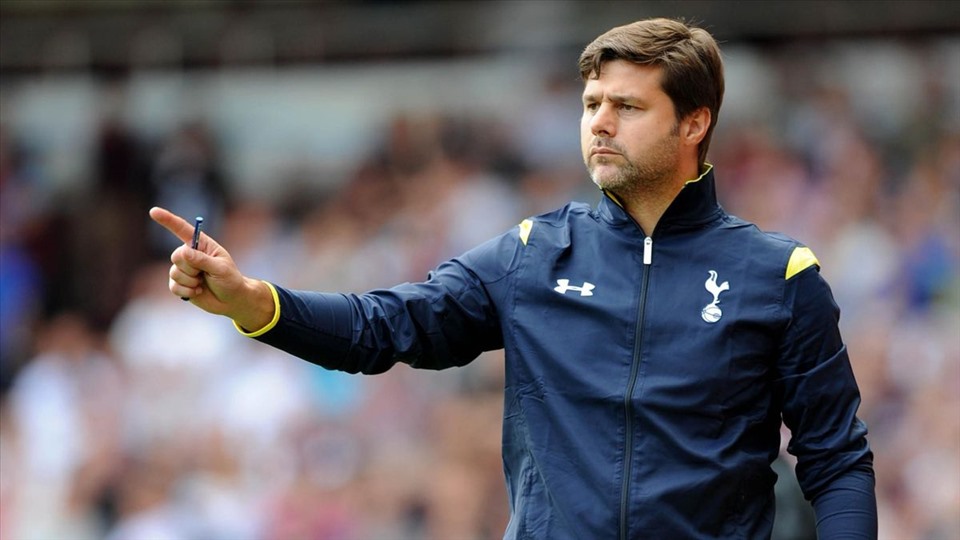
Pochettino Drops the Challenge: Believe You Can Win It All
Mauricio Pochettino isn’t here to make the United States respectable. He’s here to make them dangerous.
The Argentine coach laid it out plainly in a recent interview: the USMNT needs to stop settling for moral victories and start acting like a team that can win the 2026 World Cup. Not compete. Not make a run. Win the whole thing.
“You cannot reach something you do not believe in,” Pochettino said, pointing to Morocco’s shocking semifinal run in 2022 as proof that mentality matters when the margins are razor-thin.
The Talent Is Already There
Pochettino’s confidence isn’t coming from nowhere. Look at the core of this USMNT roster:
Christian Pulisic is thriving at AC Milan, playing every week in Serie A. Weston McKennie is a regular starter at Juventus. Gio Reyna has shown elite playmaking at Borussia Dortmund and Nottingham Forest. Tyler Adams, back from injury at Bournemouth, remains the team’s emotional leader. Timothy Weah just moved to Marseille, adding more versatility to the attack.
These aren’t prospects hoping to catch a scout’s attention. They’re professionals competing in the Champions League, playing meaningful matches under constant pressure.
For Pochettino, that changes everything. A team stocked with starters from Milan, Juventus, Marseille, and Premier League clubs doesn’t need to prove they belong anymore. They need to prove they can win when it counts.
Home Field Could Be the X-Factor
The U.S. will co-host the 2026 World Cup with Mexico and Canada, and history shows home tournaments shift the odds.
France won it all in 1998. Germany reached the semis in 2006. South Korea’s miracle run in 2002 electrified a nation. Playing at home means shorter travel, familiar venues, packed stadiums, and energy that can tilt knockout games.
Pochettino sees the home tournament as an advantage the U.S. must embrace, not fear. “If we avoid the pressure,” he warned, “someone else will take it and they won’t apologize.”
The Track Record Tells a Different Story
Let’s be honest: the USMNT’s World Cup history isn’t exactly intimidating.
The 2002 quarterfinal run in South Korea remains the peak. Since then, it’s been three straight Round of 16 exits in 2010, 2014, and 2022. In Qatar, the U.S. held England to a draw but got dismantled by the Netherlands in the knockouts.
The lesson? Being competitive isn’t enough. Knockout soccer punishes hesitation. The traditional powers – Brazil, Germany, France, Argentina – don’t figure out their ambition at the tournament. They show up with it already locked in.
Media Reaction: Appreciate the Mindset, Question the Reality
American sports media gave Pochettino credit for shifting the conversation.
ESPN and The Athletic framed it as a necessary mindset change. U.S. players aren’t passengers in Europe anymore – they’re contributors in elite environments. The critique: belief alone won’t overcome knockout experience, but the days of asking “do we belong?” should be over.
Fox Sports analysts agreed the U.S. won’t enter as a top-five favorite, but tournaments aren’t league tables. They reward conviction and the ability to survive pressure. A home World Cup is exactly when you abandon the idea that progress only comes in baby steps.
Players Are Already on the Same Page
USMNT players haven’t directly responded to Pochettino’s comments, but their recent public statements line up perfectly.
Pulisic has repeatedly said the team needs to dump the “inferiority mindset” and stop playing like they’re asking for permission. McKennie talked about this group being seasoned professionals, not hopeful prospects. Reyna said bluntly: “We don’t go anywhere to be spectators.”
The team also brings momentum from Concacaf dominance. They’ve won the Nations League in 2021, 2023, and 2024, beating Mexico twice in finals and Canada once. Those titles don’t prove global dominance, but they show a team comfortable in elimination matches.
Fans Split on the Big Talk
Supporter reactions broke predictably. Younger fans who grew up watching Americans succeed in Europe loved it. For them, Pochettino is validating what they already believe: U.S. soccer doesn’t need to apologize for ambition anymore. Older fans, shaped by decades of underdog mentality, are more cautious. Some worry about losing the grit-and-defiance identity. Others say modest expectations at a home World Cup feel outdated.
What Pochettino Is Really Saying
Pochettino isn’t guaranteeing a trophy. He’s demanding the team stop acting like they’re still learning and start behaving like contenders right now.
In his world, ambition isn’t earned through incremental progress – it’s declared, then proven through execution. He’s coached rooms full of stars built to win immediately, not develop slowly.
The 2026 World Cup will test whether the USMNT can handle that standard. They don’t need Germany’s infrastructure or Brazil’s history. They just need to accept that ambition isn’t arrogance and that playing scared won’t protect them from pressure.
If this generation can’t embrace the expectation of contending at home, the problem won’t be tactics or talent. It’ll be identity, and whether the United States is finally ready to think like a winner.

Blair Kensington is specialized in data-driven match context, tactical trends, and AI-assisted performance insights. With a focus on turning complex metrics into clear narratives, Blair covers major leagues and international competitions through the lens of probability, form cycles, and underlying numbers. His work helps readers understand why results happen, not just what happened.