


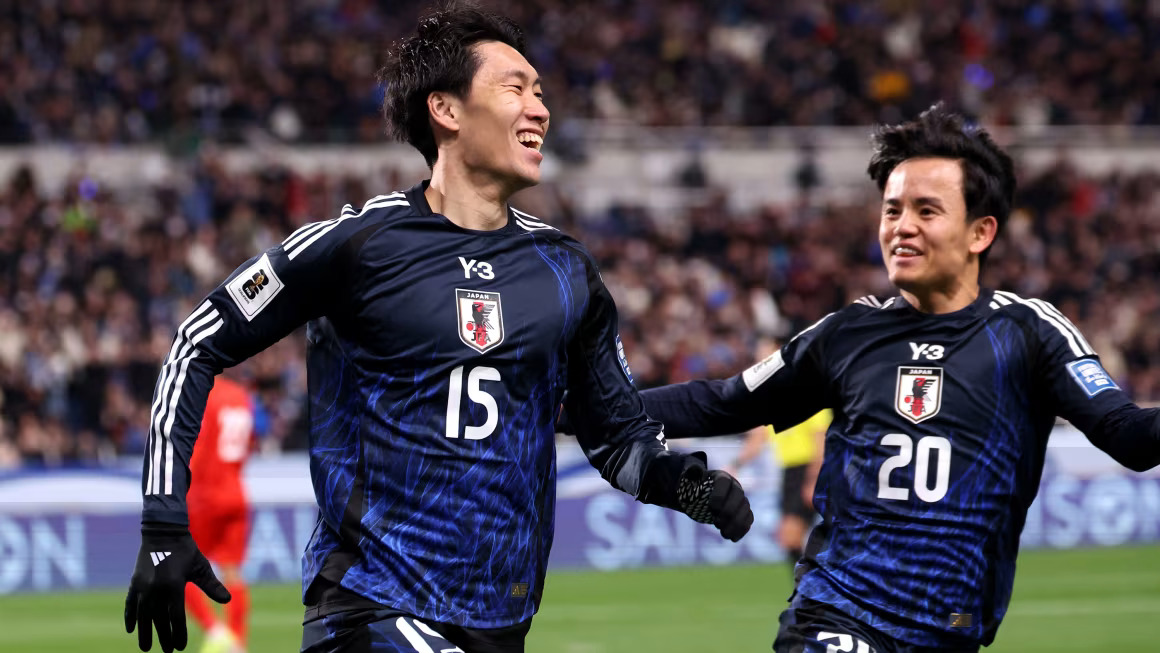
Japan doesn’t talk about the World Cup the way most countries do. The dream isn’t built on hype or wishful thinking. It’s built on a system.
You can see it in the country’s school-sports culture, where youth football is treated like a national stage rather than an afterthought. A recent opening ceremony for Japan’s national high school soccer championship looked more like a major professional event than a student competition, complete with packed stands, choreographed spectacle, and a “big match” atmosphere that felt closer to a World Cup night than a school tournament.
That visual matters, because it captures the core of Japan’s football identity: development starts early, it’s taken seriously, and it stays serious for a long time.
A country where school football feels like a major event
In many nations, school sport is something you grow out of once the academy or professional route opens up. In Japan, school football is part of the pipeline. The national high school tournament has been held for more than a century, and it remains a premier showcase for young talent.
When a school tournament can command attention at the national level, it sends a clear message to players: you are not playing in a “small” environment. You are playing on a stage that can shape careers.
And it sends a message to fans too: following teenagers isn’t niche. It’s part of the culture.
Japan’s World Cup dream is written into the plan
Japan’s confidence is not accidental. The country has long pushed a long-term goal of eventually winning the World Cup. That kind of ambition changes how football is built from the ground up.
When a federation and a society align around a distant target, the work becomes less emotional and more methodical: coaching education, youth competition formats, fitness standards, talent identification, and the patience to develop players at multiple levels rather than rushing every prospect into the pro game at 17.
Japan’s “dream” is essentially an infrastructure project.
The high school-to-university pathway keeps the player pool deep
One of the most underrated parts of Japan’s development model is that the pathway doesn’t narrow too early. Many talented players do go professional at a young age. But Japan also keeps another lane open – and respected: high school football and university football.
That matters because development is not identical for everyone. Some players need time to grow physically. Some need time to refine decision-making under pressure. Some simply become late bloomers.
A system that lets those players keep competing at a high level, with real coaching and real intensity, is a system that prevents talent from leaking out.
The Mitoma example: proof that “late” can still become elite
Kaoru Mitoma has become the modern symbol of Japan’s patient route. He is the example many young players point to when they need reassurance that going to university doesn’t mean giving up on the highest level.
Mitoma’s story resonates because it flips the usual narrative. Rather than rushing to sign a professional contract as a teenager, he stayed in education, continued developing, and then broke into the top level after building a stronger foundation.
His rise turned one message into a belief: in Japan, the system doesn’t punish you for taking time. It can reward you.
University football is not a soft option
Another reason Japan’s school pathway works is that it’s not treated as a “less serious” branch. University football, in particular, has grown into a competitive environment that still produces professionals and gives young players meaningful minutes.
It also has a wider purpose: it creates more match-ready players. Not every future international is a teenage prodigy. Some arrive at 21, 22, or 23 – and Japan’s university structure helps those players arrive prepared rather than undercooked.
When your national team is built from waves, not one single generation, you become harder to break.
Why this makes Japan a real World Cup 2026 storyline
Japan’s World Cup ceiling rises when three things happen at once:
- youth development is treated as culture, not content
- the player pool remains deep into early adulthood
- long-term ambition is matched by long-term structure
That doesn’t guarantee a trophy. The World Cup is ruthless, and the final rounds punish even small weaknesses. But it does explain why Japan can dream without sounding unrealistic.
Because the dream isn’t a fantasy. It’s a direction.

Blair Kensington is specialized in data-driven match context, tactical trends, and AI-assisted performance insights. With a focus on turning complex metrics into clear narratives, Blair covers major leagues and international competitions through the lens of probability, form cycles, and underlying numbers. His work helps readers understand why results happen, not just what happened.