


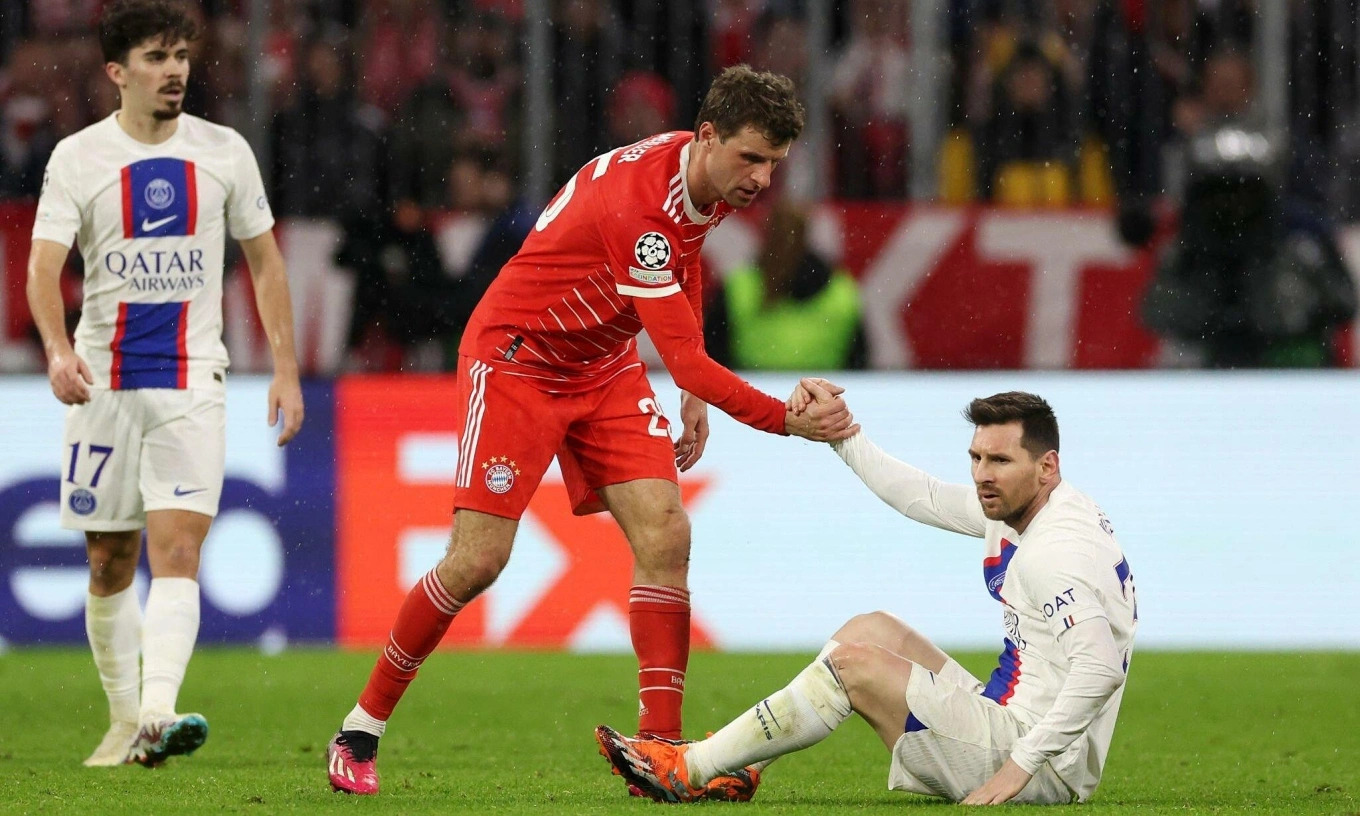
On the surface, MLS Cup 2025 appears to be a showdown between two legendary names. Look deeper, and you will find something more complex – a tactical battle between two contrasting philosophies that have shaped Inter Miami and Vancouver Whitecaps all season long.
Inter Miami thrive on patient possession and structured attacking patterns. Vancouver Whitecaps prefer intelligent pressing and rapid transitions that amplify Thomas Muller’s unique spatial awareness. Understanding how these systems operate reveals why both teams reached the final and why small details could determine the outcome.
Inter Miami’s System: Engineering Space for Messi
Inter Miami do not simply hand the ball to Messi and hope for magic. Their entire structure is engineered to position him where he can influence every phase of play.
The build-up phase starts with short passes from the back. A midfielder drops between the center backs to form a temporary back three, which releases the full backs, particularly Jordi Alba on the left, to push higher up the pitch. As possession advances, Messi drifts into the right half-space, positioning himself between the opponent’s midfield and defensive lines.
From this zone, Messi sees the entire field. He can switch play to the opposite flank, combine with runners attacking the box, or cut inside onto his lethal left foot. Miami’s attacking movements are designed to stretch defenses horizontally before finding Messi in a pocket of space just as the structure collapses.
The 5-1 demolition of New York City in the Eastern Conference final demonstrated this approach at its peak. Miami dominated possession, sustained pressure in the attacking third, and repeatedly overloaded the left channel. Messi did not need to score to control the match. His assist for the third goal came after he attracted multiple defenders, then released a teammate into the space they vacated.
This system accomplishes two things simultaneously. It reduces the physical demands on a thirty-eight-year-old body while maximizing the impact of Messi’s decision-making, still the sharpest in world football.
Vancouver’s Approach: Vertical Football and the Raumdeuter
Vancouver Whitecaps play a fundamentally different style. They do not pursue possession for its own sake. Instead, they focus on winning duels in midfield and attacking quickly once they recover the ball.
Their pressing typically engages in the middle third. Forwards and midfielders step up as a coordinated unit when opponents play into central zones. If they force a turnover, Vancouver aims to reach the final third within three or four passes.
This is precisely where Thomas Muller becomes essential. He does not occupy a fixed position. He moves laterally, sliding into gaps that appear when defenders track runners or step toward the ball. His famous raumdeuter instincts, the ability to find and exploit space others cannot see, allow him to materialize unmarked at critical moments.
Since arriving from Bayern Munich in summer 2025, Muller has given Vancouver a tactical brain between the lines. In the 3–1 Western Conference final victory over San Diego, he served as the link between midfield ball recoveries and dangerous actions near goal. Sometimes he delivered the final pass. Other times he arrived late in the box to meet cutbacks.
Vancouver’s vertical style suits his strengths perfectly. Younger, faster teammates handle the heavy running. Muller handles the timing, angles, and decisive moments.
The Matchups That Will Shape the Final
Several specific battles will influence the rhythm and outcome of Inter Miami vs Vancouver Whitecaps.
The first centers on how Vancouver’s holding midfielder handles Messi. Step tight, and space opens in behind. Sit deep, and Messi will have time to turn and face the goal with the ball at his feet. Neither option is comfortable.
The second involves Miami’s defensive structure tracking Muller. The center backs and defensive midfielder must communicate constantly about who follows him when he drifts. A moment of hesitation leaves him free to receive and orchestrate.
The third matchup unfolds on Miami’s left flank. Alba and the wide forward will look to overload Vancouver’s right back. If the Whitecaps’ winger fails to track back consistently, Miami can create two-on-one situations in dangerous areas.
Finally, transition control in midfield could prove decisive. Both teams commit numbers forward when attacking. Whichever side wins more second balls in central areas will generate cleaner counter-attacking opportunities.
How the Coaches Might Adapt During the Match
Both staff understand that rigid game plans rarely survive contact with a final. Tactical flexibility could separate the winner from the loser.
Inter Miami may assign one midfielder to sit slightly deeper when attacks break down. That player’s responsibility would be tracking Muller early in transition, preventing him from turning freely. Miami could also instruct their right back to stay more conservative, effectively creating a back three in possession while Alba pushes high on the opposite flank.
Vancouver might vary their pressing height throughout the ninety minutes. They could begin in a compact mid-block to keep space tight between their lines, then trigger bursts of higher pressure after backward passes from Miami’s midfield to the center backs. The goal would be disrupting clean deliveries into Messi and forcing Miami into longer, less controlled balls.
On the offensive side, Vancouver may target Miami’s right flank. If the right back stays deeper to protect against counters, that channel could offer room for wide players to drive forward and cut crosses back toward Muller.
Set pieces add another layer of complexity. Finals frequently hinge on dead-ball situations. Miami possesses Messi as both a direct threat from free kicks and a specialist delivering crosses. Vancouver can counter with rehearsed routines targeting specific aerial mismatches.
Assessing the Tactical Balance
There is no clear favorite in this MLS Cup final from a tactical standpoint.
Inter Miami’s structure provides more consistent ball control and more reliable access to the final third. Vancouver’s style, however, punishes sloppy passes and slow defensive recoveries with ruthless efficiency.
If Miami scores first, their possession game becomes even more potent. They can dictate tempo, choose when to accelerate, and force Vancouver to chase. If Vancouver strike early, Miami may push their full backs higher in search of an equalizer, which would open space for Muller to exploit on the counter.
Ultimately, the final may come down to which system better protects and serves its star. If Miami can keep Messi receiving between the lines with supporting runners around him, they will create chances. If Vancouver can free Muller in transition moments, they will threaten without needing extended spells of possession.From the outside, this looks like a duel between two iconic players. On the inside, the 2025 MLS Cup final is a chess match between two carefully constructed game models, and that is what makes it essential viewing for anyone who appreciates tactics as much as talent.

Katie Dawson is a football news writer at Poly Insights, covering global competitions through a data-first and context-driven lens. Her work focuses on translating match events, form trends, and underlying performance indicators into clear, reader-friendly analysis. With a strong emphasis on accuracy and clarity, Katie helps fans understand how numbers, tactics, and momentum shape results – before and after kickoff.