


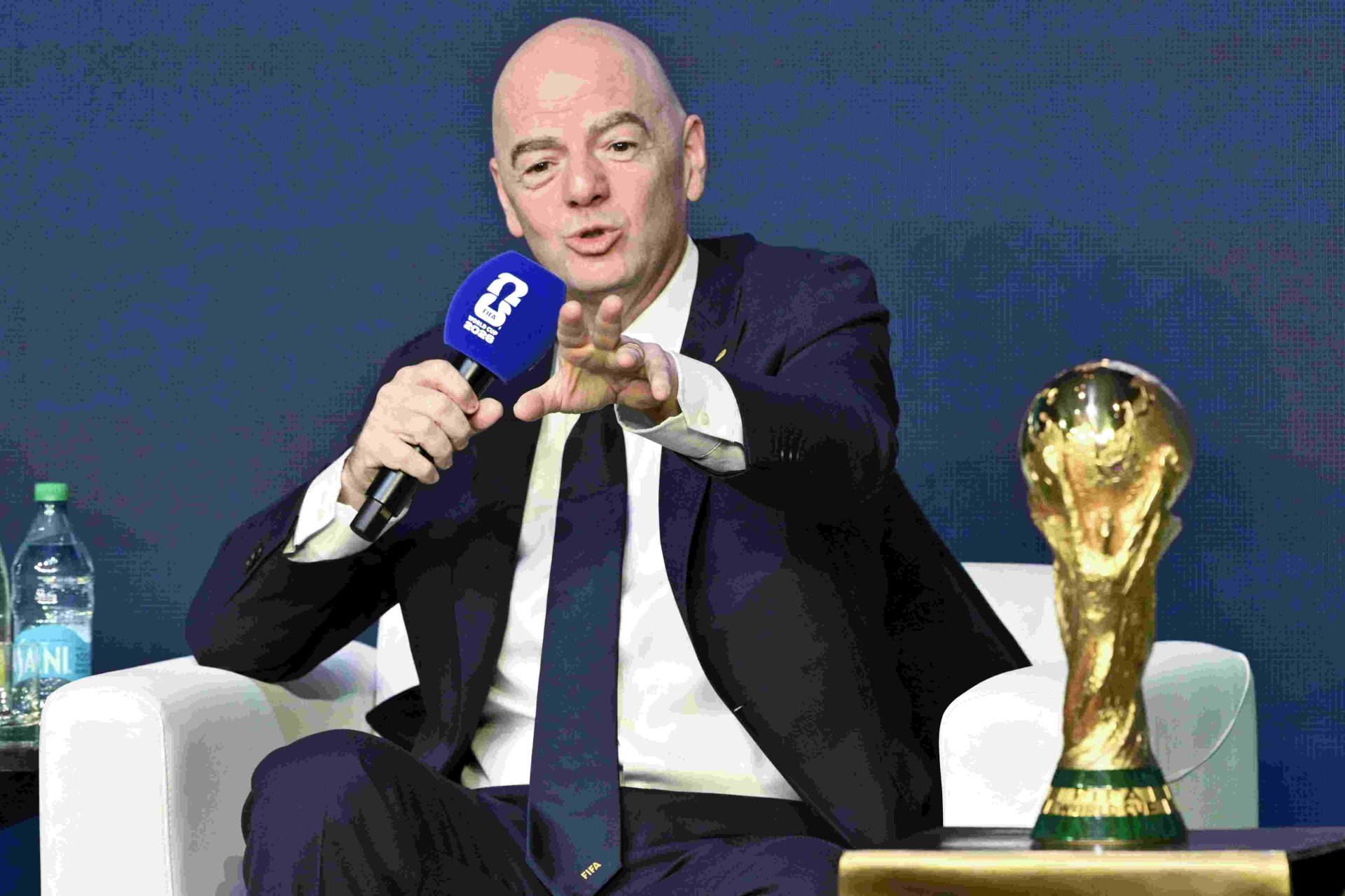
The countdown to the FIFA World Cup 2026 is already generating historic momentum. FIFA has revealed that it received 150 million ticket requests in just 15 days, a staggering figure that highlights the unprecedented demand for a tournament set to be hosted primarily in the United States, alongside Canada and Mexico. As excitement surges across American sports fans, the record-breaking interest is also fueling debate around ticket prices, availability, and who will ultimately get a seat at the biggest soccer event ever staged on U.S. soil.
Record-breaking demand for World Cup 2026
FIFA has confirmed that it received around 150 million ticket requests for the 2026 FIFA World Cup in just 15 days. The announcement was made by FIFA president Gianni Infantino, who highlighted the unprecedented level of global interest in the tournament.
World Cup 2026 will be the largest edition in history, hosted across the United States, Canada, and Mexico, with the majority of matches played on U.S. soil. According to FIFA, this scale alone has driven demand far beyond previous tournaments.
Only 6-7 million tickets available
Despite the massive interest, FIFA estimates that only 6 to 7 million tickets will be available in total. That gap between supply and demand helps explain why fans are facing a highly competitive ticketing process.
Infantino pointed out that across nearly a century of World Cup history, FIFA has sold approximately 44 million tickets in total. The current volume of requests, he said, would theoretically fill hundreds of World Cups, underscoring just how intense demand has become.
U.S. fans lead global ticket requests
One key detail stands out for American audiences: fans from the United States submitted the highest number of ticket requests, ahead of Germany and the United Kingdom. With the U.S. hosting most matches, domestic interest is expected to remain strong even before match schedules and team pairings are finalized.
For American supporters, this means competition for seats will be fierce, especially for high-profile matches and knockout-stage games.
Ticket prices spark debate
The surge in demand has arrived alongside criticism from supporter groups over high ticket prices, which many believe exceed those of previous World Cups. Infantino has defended FIFA’s pricing strategy by pointing to overwhelming demand and emphasizing that World Cup revenue is reinvested into football development worldwide.
While FIFA’s argument centers on long-term growth of the sport, some fans worry that traditional supporters may be priced out, particularly once travel, accommodation, and local transportation costs are added.
The $60 ticket tier explained
In response to affordability concerns, FIFA introduced a $60 ticket category aimed at fans of national teams that have qualified for World Cup 2026. While this move has been welcomed by some supporters, it is limited in scope and does not apply to all matches or seating categories.
As a result, the $60 option is seen more as a targeted measure rather than a broad solution to pricing concerns.
Where ticket sales stand right now
FIFA says ticket sales are currently in the Random Selection Draw phase. During this stage, fans submit requests within a fixed window, and tickets are allocated through a lottery system rather than first-come, first-served.
With demand already many times higher than available inventory, FIFA has made it clear that not all applicants will be successful in this round.
What this means for U.S. fans
For fans in the United States planning to attend FIFA World Cup 2026, the message is clear: demand is historic, ticket competition will be intense, and pricing will remain a central talking point. Early planning, flexibility, and realistic expectations will be crucial as the tournament approaches.

Blair Kensington is specialized in data-driven match context, tactical trends, and AI-assisted performance insights. With a focus on turning complex metrics into clear narratives, Blair covers major leagues and international competitions through the lens of probability, form cycles, and underlying numbers. His work helps readers understand why results happen, not just what happened.