


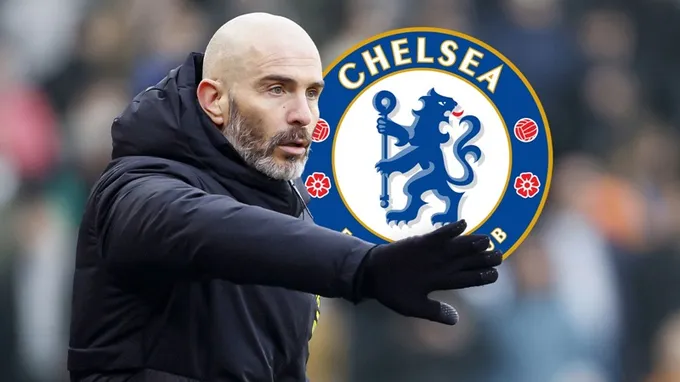
Chelsea’s recent headlines have been shaped less by results and more by interpretation. In a season that still shows signs of progress, Enzo Maresca Chelsea tension has unexpectedly become the dominant narrative. Not because of a collapse on the pitch, but because of how uncertainty was allowed to grow off it.
The situation feels unnecessary, and that is precisely why it has unsettled the club’s atmosphere.
Results Were Not Signaling a Crisis
Chelsea endured a demanding spell with defeats to Leeds and Atalanta, followed by a draw against Bournemouth. However, those results came amid a congested schedule and were quickly followed by victories that restored balance.
At this stage of the season, Chelsea remain competitive domestically and in cup competitions. Performances have fluctuated, but there has been no clear evidence of structural decline or loss of direction. From a purely sporting perspective, the club was navigating a difficult phase rather than sliding toward instability. The tension did not originate from results alone.
A Moment of Frustration That Shifted the Focus
After a routine home win over Everton, Maresca referenced what he described as the most difficult 48 hours of his time at Chelsea. The timing was puzzling. Rather than closing a chapter after a positive result, the comment reopened questions that had largely faded.
Crucially, Maresca did not clarify who his remarks were aimed at. He did not accuse the ownership, the sporting directors, or the supporters. Nor did he provide context when asked directly. That ambiguity created space for speculation, allowing narratives to form without factual grounding.
In elite football, what is left unsaid often becomes louder than what is spoken.
Chelsea’s Model Leaves Little Room for Public Dissonance
Chelsea’s modern structure is intentionally collective. Sporting decisions are shaped by a leadership group rather than driven solely by the head coach. This model has been clearly communicated and consistently applied.
Within that framework, managers are given influence but not unchecked authority. Chelsea’s ownership has repeatedly emphasized long-term planning, squad development, and sustainability over short-term reactions. Public expressions of dissatisfaction, even when emotional rather than confrontational, sit uneasily within that system.
Progress Still Exists Beneath the Noise
Maresca’s tenure has not been defined by stagnation. Chelsea have shown tactical identity, greater control in possession, and a willingness to trust younger players. Injuries to key figures have complicated rotation, and some tactical decisions have understandably drawn scrutiny.
Yet taken as a whole, the team remains competitive. The expectation at Chelsea this season has been evolution, not immediate domination. From that perspective, the trajectory has not dramatically changed. The tension has overshadowed that reality.
Why the Situation Feels Riskier Than It Should
Chelsea have not publicly questioned Maresca’s position. There has been no indication of internal conflict escalating beyond interpretation. However, perception carries weight. When uncertainty enters the conversation, every upcoming result gains disproportionate importance.
Should performances dip again, the narrative may harden, not because of footballing collapse, but because doubts were allowed to linger. This is how manageable situations become awkward ones.
The Underlying Lesson for Maresca
The core issue behind Enzo Maresca Chelsea tension is not authority, but awareness. Chelsea have never been a club built around one voice. Stability flows from cohesion between ownership, sporting leadership, and coaching staff.
Maresca’s work on the pitch has earned patience. What remains essential is restraint off it. At a club defined by structure, unity matters more than emotion.
Conclusion
Chelsea are not on the brink of crisis. They are navigating a season of growth with predictable challenges. The tension that has emerged feels avoidable, born more from timing than from substance.
If Maresca refocuses attention where it belongs—on performance, development, and clarity—the noise will fade quickly. At Stamford Bridge, progress is collective, and it always has been.

Blair Kensington is specialized in data-driven match context, tactical trends, and AI-assisted performance insights. With a focus on turning complex metrics into clear narratives, Blair covers major leagues and international competitions through the lens of probability, form cycles, and underlying numbers. His work helps readers understand why results happen, not just what happened.