


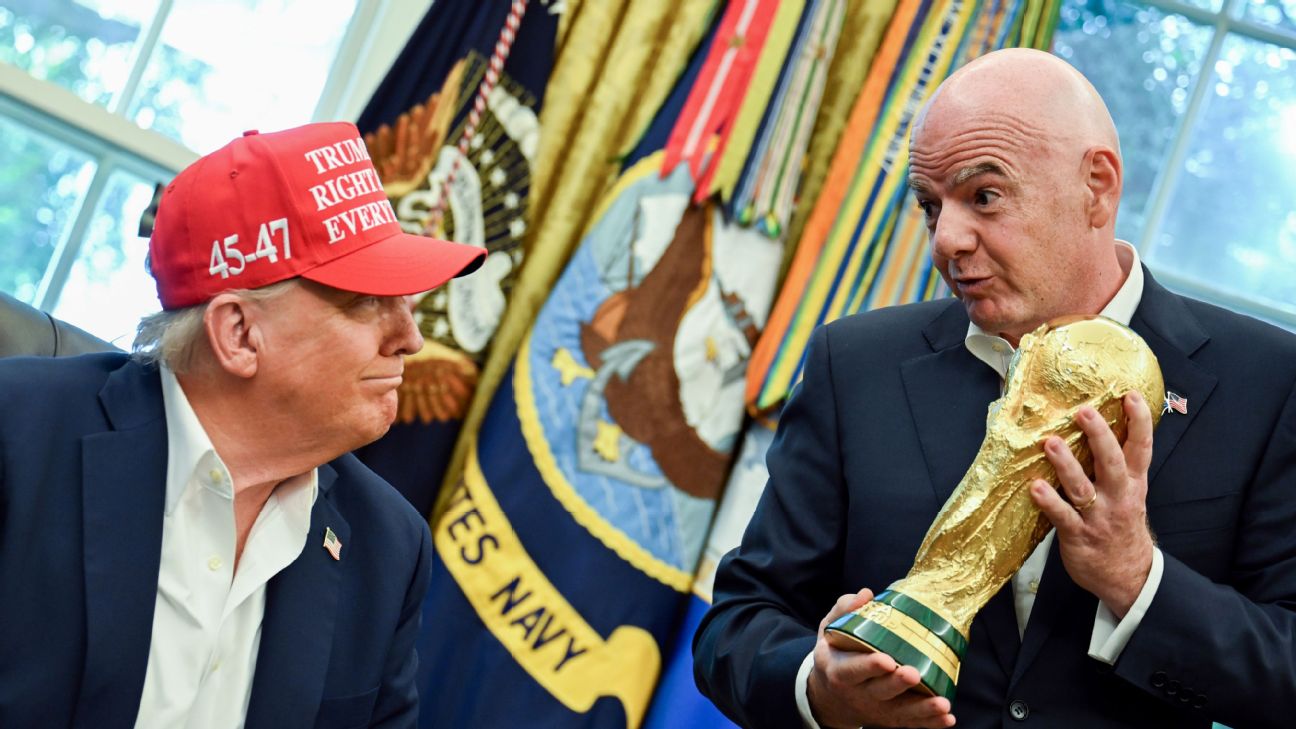
With less than five months remaining before kickoff, the 2026 World Cup has been drawn into an unexpected political debate. A group of lawmakers in the United Kingdom has formally urged FIFA to reconsider the United States’ role as a host nation, raising questions that go beyond football and into the wider global spotlight.
While the request does not come with any binding authority, it has added a layer of controversy to a tournament that is already historic in scale and ambition.
The United States’ Central Role in World Cup 2026
The 2026 World Cup will be co-hosted by the United States, Canada, and Mexico, but the American role is clearly dominant. Out of 104 matches scheduled across the tournament, 78 games will take place in the U.S., including all knockout-stage fixtures.
This structure places the United States at the center of tournament operations, from logistics and broadcasting to sponsorships and global fan engagement. Major stadiums, transportation networks, and security plans have all been designed around the U.S. serving as the primary host.
Because of that, any suggestion of removing the United States from hosting duties would have far-reaching consequences.
Why Lawmakers Are Calling on FIFA to Act
According to reports, the lawmakers behind the petition argue that the World Cup should be staged in an environment that fully aligns with international standards and avoids controversies that could affect the image and values of global sport.
Their appeal reflects a broader trend in modern football, where major tournaments are increasingly influenced by political considerations and public scrutiny. Even without concrete demands, the call itself has sparked debate about how much external pressure FIFA should acknowledge when organizing its flagship competition.
Is It Realistic for FIFA to Remove the USA as a Host?
From a logistical and operational perspective, the answer is almost certainly no.
Reassigning 78 matches, including every knockout-round game, with only months to spare would be an unprecedented challenge. Stadium scheduling, travel planning, broadcast agreements, sponsorship contracts, and team preparations are already locked in. Any late-stage change would risk widespread disruption and financial fallout.
Most analysts agree that such a move would create chaos rather than solve any underlying concerns.
FIFA’s Silence and the Most Likely Outcome
So far, FIFA has not issued any statement indicating that it is considering changes to the hosting arrangement. Preparations for World Cup 2026 are already in their final stages, with stadium upgrades, training facilities, and infrastructure projects largely complete.
For that reason, the prevailing view within the football world is that the United States will retain its hosting role, and the controversy will remain largely symbolic rather than transformational.
What This Controversy Says About Modern Football
Even if no action follows, the debate highlights how global football no longer exists in isolation. Political pressure, governance debates, and international perception now play a role in shaping the world’s biggest sporting events.
As the countdown to World Cup 2026 continues, FIFA will face growing expectations to ensure the tournament runs smoothly and remains focused on football itself. For now, the United States remains firmly at the heart of the competition, but the conversation serves as a reminder that hosting the World Cup brings scrutiny that extends far beyond the pitch.

Blair Kensington is specialized in data-driven match context, tactical trends, and AI-assisted performance insights. With a focus on turning complex metrics into clear narratives, Blair covers major leagues and international competitions through the lens of probability, form cycles, and underlying numbers. His work helps readers understand why results happen, not just what happened.